(All rights belong to their owners. Images used here for review purposes only.)
Nana-nin no Sheikusupia, by Harold Sakuishi, Grade B+
Ok, the second of the big collections has come out, and the third and final volume will hit the shelves the first week of September. Again, these are large books, at about 540 pages, but they're also 1,000 yen ($9.50 USD), not including tax. The artwork is the same as before, but we're getting a lot more speculation as to what William Shakespeare's life was like as a child, and his relationship to his friend John Combe. Historically, there are a lot of large gaps in Shakespeare's life, and speculation as to how his father (a glove maker and leather worker) went bankrupt. Sakuishi picks the more controversial choices, and then spins the story around those. As such,
Seven Shakespeares is about as close to historical fiction as you'd expect to get. That doesn't mean there's anything intrinsically wrong with the story - you just have to take it with a grain of salt.
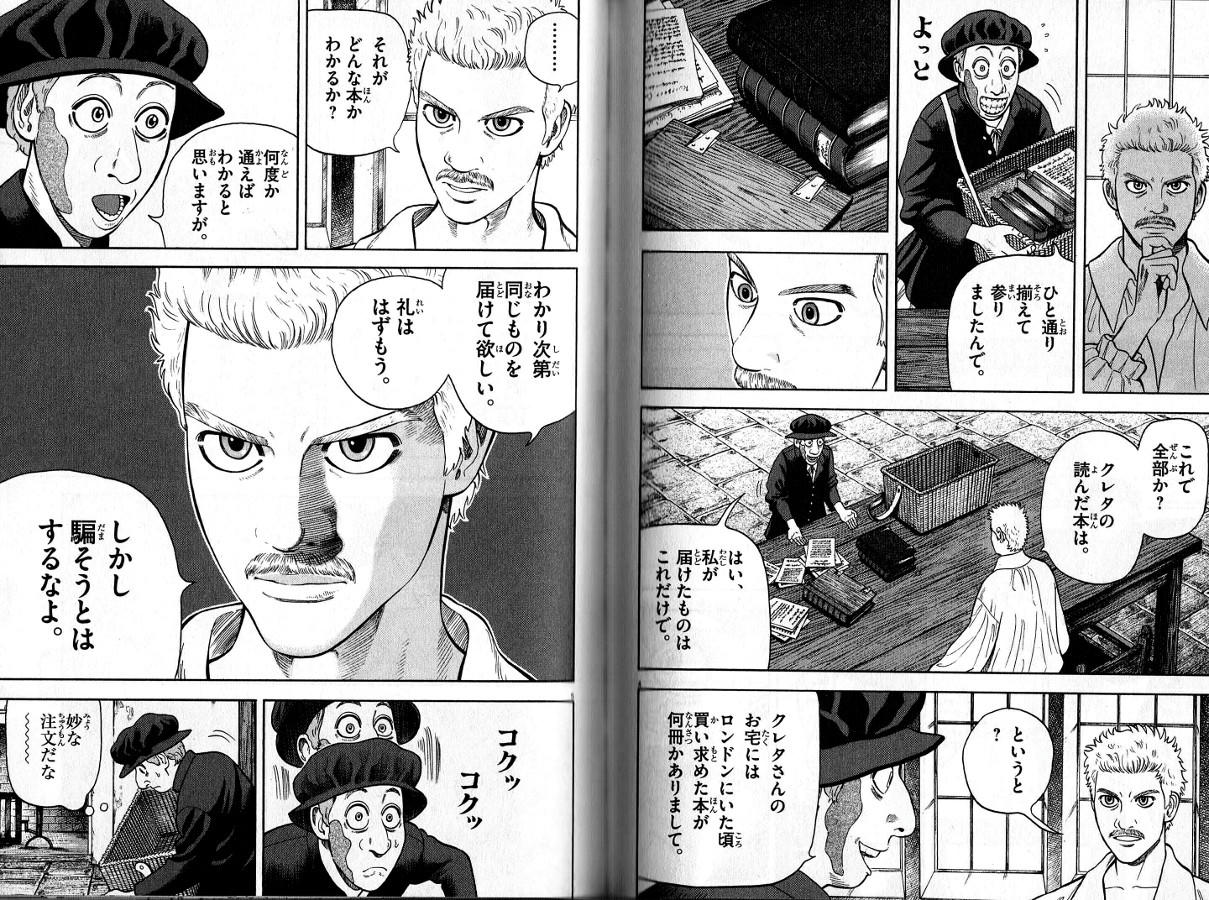
(Lance asks Thomas Soup about Kureta's reading habits.)
Li wakes up from a bad dream, then goes into a panic attack when Lance tells her the group is going to go into town for shopping (Milo hates the idea of being around other people, too). They dress Li up as a boy so her jet-black hair and pupils won't attract as much attention, and then set out. In town, Li desperately searches for anyone else that has black hair like hers, but it's obvious that no one else survived the Chinatown mudslide and floods. When they get ready to eat lunch, Li tells Lance to not eat the fried chicken from a street seller - a minute later, all the other customers start throwing up. When they try going home, she gets Lance to wait for another carriage, because the first one is about to go out of control when a hornet lands on the forehead of one of the horses. Lance is now convinced that Li is psychic, but he bides his time for getting answers. That night, Hughs returns from his sales trip through Bristol and London, and gives everyone souvenirs - a silly hat for Lance, which gets used as a stage prop; a glass bottle for Milo to store food in; and a cape to keep Li warm when she stands in the garden at night. Li is overcome with emotion, unable to get Hughs a return gift, so she writes another sonnet for him. This sonnet brings everyone to tears, and further reinforces Lance's belief that someone so young (Li is estimated to be 16) has gone through a lot of bad things. Li puts on her cape and goes out to the fish pond, where she relates her history to Lance, and he promises to give her a better life through the theater. When he gets by himself, he thinks of her as "Kuro no Megami" (the dark goddess).
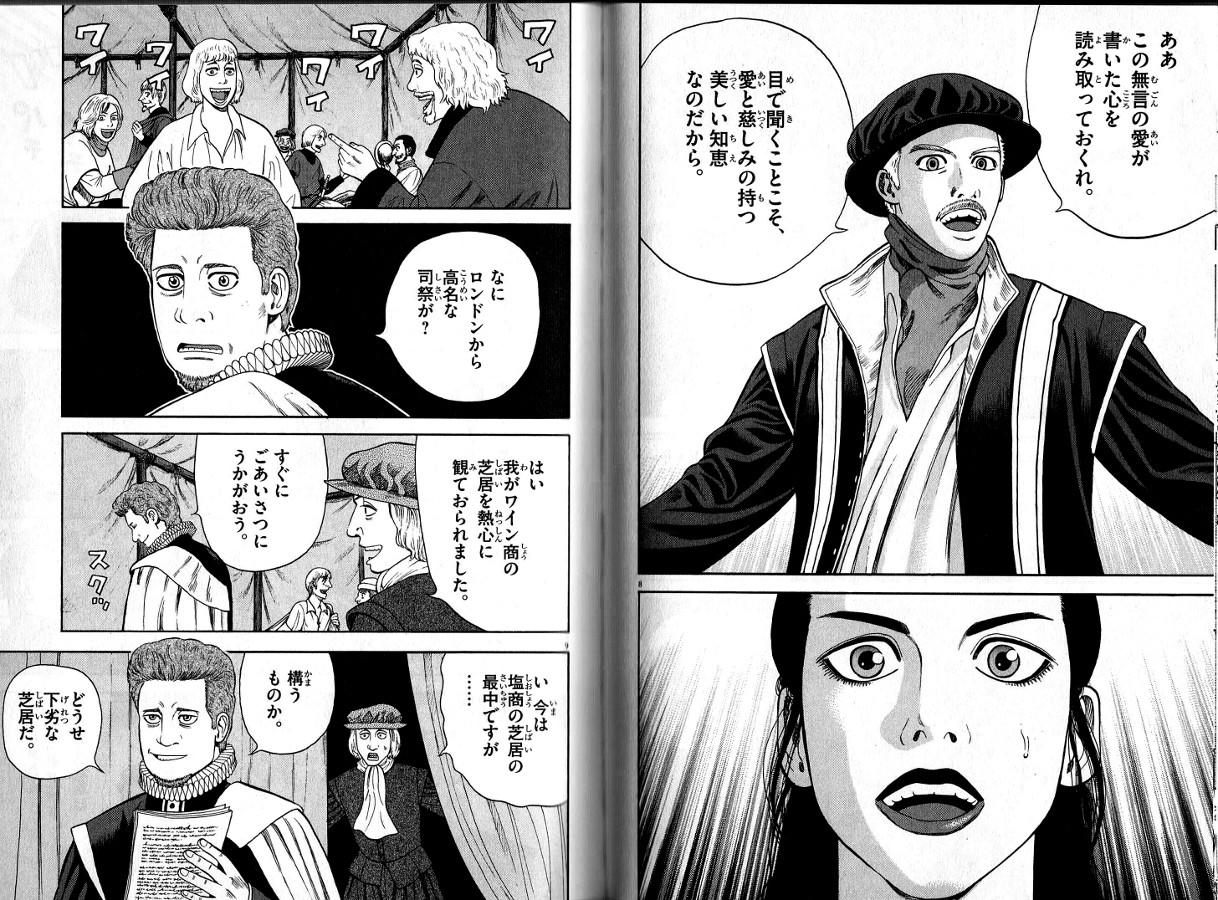
(Lance delivers Li's big sonnet speech in
Odette, to Annette's glee. Kureta is convinced he's already won.)
One day, Lance is out making the rounds for the salt guild when he meets Thomas Soup, the bookseller. This is also about when the guild wars start reaching a peak. Kureta (sp?) of the wine guild has also been writing morality plays for the Church, and he's been gaining greater popularity from the townsfolk of Liverpool. To add further pressure on him, Kureta challenges Lance to a theater duel, to be judged by the Mayor and Miller, the head of the Wine Guild; the winner gets Annette's hand in marriage, and the loser has to give up play writing for life (Annette is Miller's daughter, and is in love with Lance). Lance learns that Thomas has sold books to Kureta, and he asks the guy to show him everything Kureta is known to have read. Armed with this knowledge, Lance sets out to create a play about a fickle woman approached by three suitors. To prove themselves to her, one is to find the biggest gemstone in the world, the second is to make her laugh and not be able to stop, and the third is to make her cry. The actors working for the salt guild aren't very good, and Hughs talks Lance into playing one of the key roles himself - which he agrees to do, and his key speech will be the sonnet Li wrote for Hughs. The night before the plays are to be performed, Lance sneaks into the Miller grounds and throws the page with the key speech up to Annette, where she's standing at the window of her bedroom. He then leaves before the groundskeepers can catch him. Annette reads the speech and is convinced that he loves her, too.
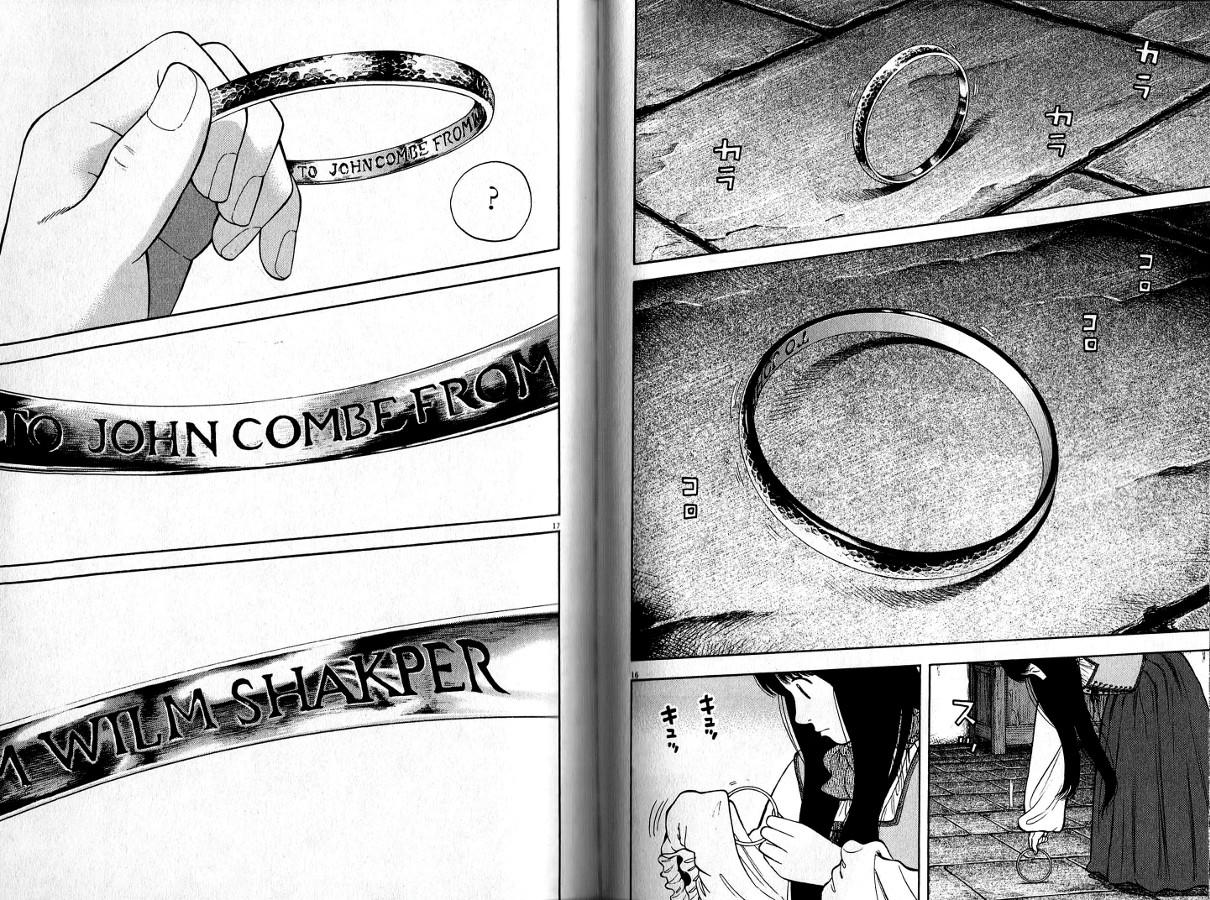
(Li finds the bracelet Lance gave to Hughs.)
The next day, all of Liverpool comes out to watch the morality plays, and the town is even visited by "Bishop Radcliff" (fictional character?), who is checking out the quality of the plays put on in the Church's name. Kureta stages his play first, and it is very well received. So well that he leaves the area and is approached by a writer wanting to ask him for an interview. But Lance's play, named
Odette in obvious reference to Annette, is an overwhelming success. Unfortunately, Miller and the Mayor were hoping to have Annette married off to Kureta, a member of Miller's own Wine Guild, so the Mayor declares Kureta the winner after all, despite the jeers from the crowd. Annette is desperate, and she runs to Lance's house to elope with him, but Hughs meets her at the door and tells her that Lance is bound by the terms of the duel and has already left Liverpool. Annette is devastated and has to return home to face her fate. However, Radcliff had greeted Lance at the end of the contest, and told him to visit him in London if he wants to write plays for a bigger stage, and Lance is getting ready to take the Bishop up on this offer. He asks what the others think - Hughs doesn't care either way, but both Li and Milo panic over going to a more crowded place. Lance gives them a day to think it over, and goes into town to do some shopping. He finds a jeweler, buys a bracelet, and asks to have it inscribed. Later, he gives the bracelet to Hughs, who says that he'll go to London first to locate a safe mansion in the countryside for them. This placates both Li and Milo. That night, Li sees Hughs' shirt and bracelet on the table, and she looks at the bracelet after it falls on the floor. She reads the inscription - "To John Combe from William Shakespeare" - and we then get another flashback to explain why the trio have fake names.
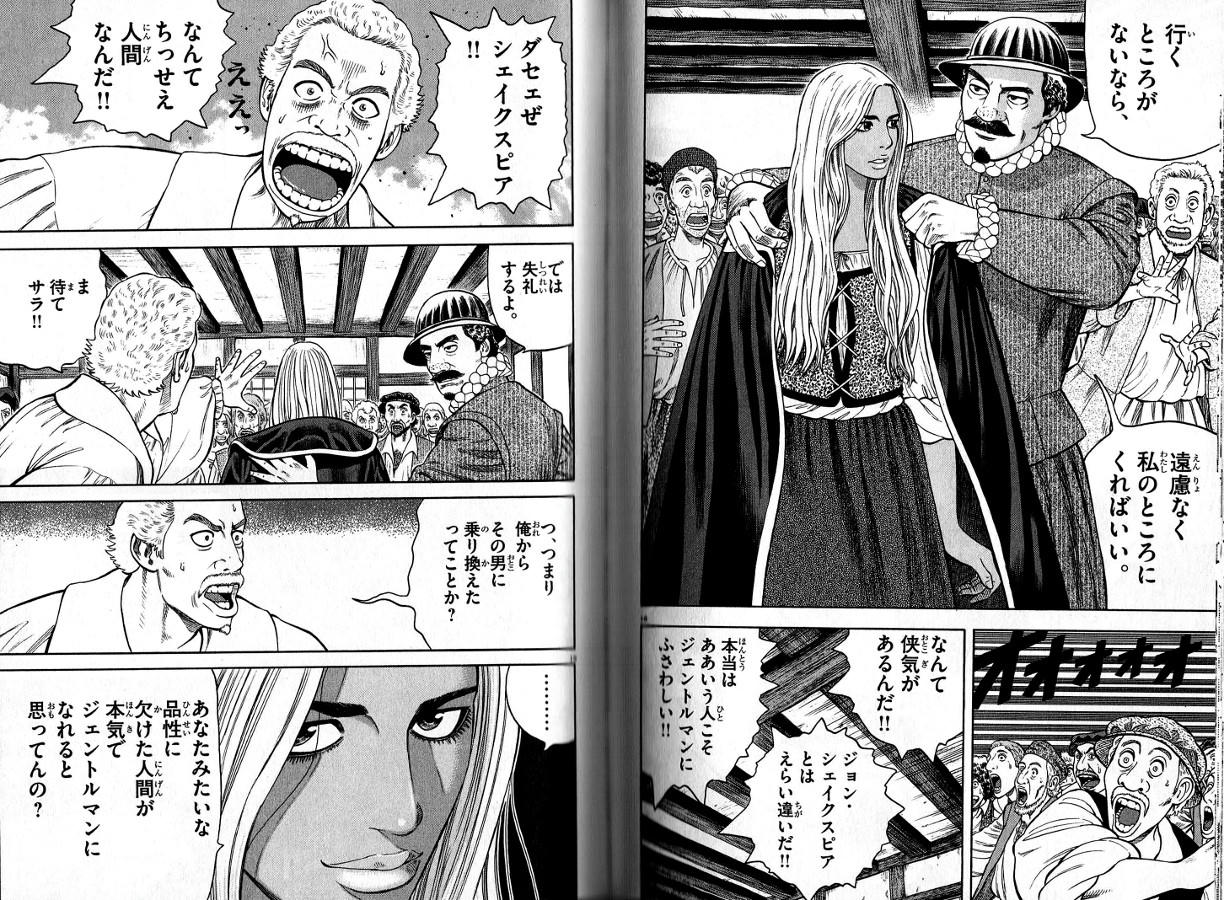
(Sarah betrays John Shakespeare.)
(Note that in
Odette, the comic does some slapstick that makes the "woman" (the actor is a man in a wig and dress) break out laughing. Lance recites Li's sonnet and makes everyone cry. Unfortunately, the comic overextends himself and falls on a support bar on his crotch, causing the princess to pass out from excessive combined laughter and tears. Then the rich guy returns with a gigantic rock, and bashes both the comic and Lance in the back of the head, killing them. He checks the princess and she's expired too, so he kills himself with the rock, so everyone dies in the end. The crowd loves it.)
The flashback starts up with a brief British history, with the marriage of King Henry the VIIIth, his desire to get divorced in order to remarry, England's break from the Catholic Church to embrace the Protestant branch, and the subsequent executions of various Catholic priests still in the country. Then, in 1564, 24 years before Lance's trip to London, we get the birth of William Shakespeare, to the family of John and Mary. Will grows up to be a precocious child, but his parents fair more poorly. Mary cracks with the deaths of 3 of her 8 children, and starts mistreating the other 5, while her husband, a leather worker that makes gloves, is cheating on her and constantly getting drunk. In 1568, Will is living in a cottage in Will's Court, 5 km from Stratford on Avon, when he first meets John Combe, a boy his own age, that is out picking fruit in his yard. Will tricks the boy into letting him take the ripest fruit, then a little later John's grandmother brings John over to the Shakespeare house to visit, and the two boys become friends. In school, Will is a lousy student and keeps falling asleep in class, and his teacher, Simon Hunt, keeps having to punish him.
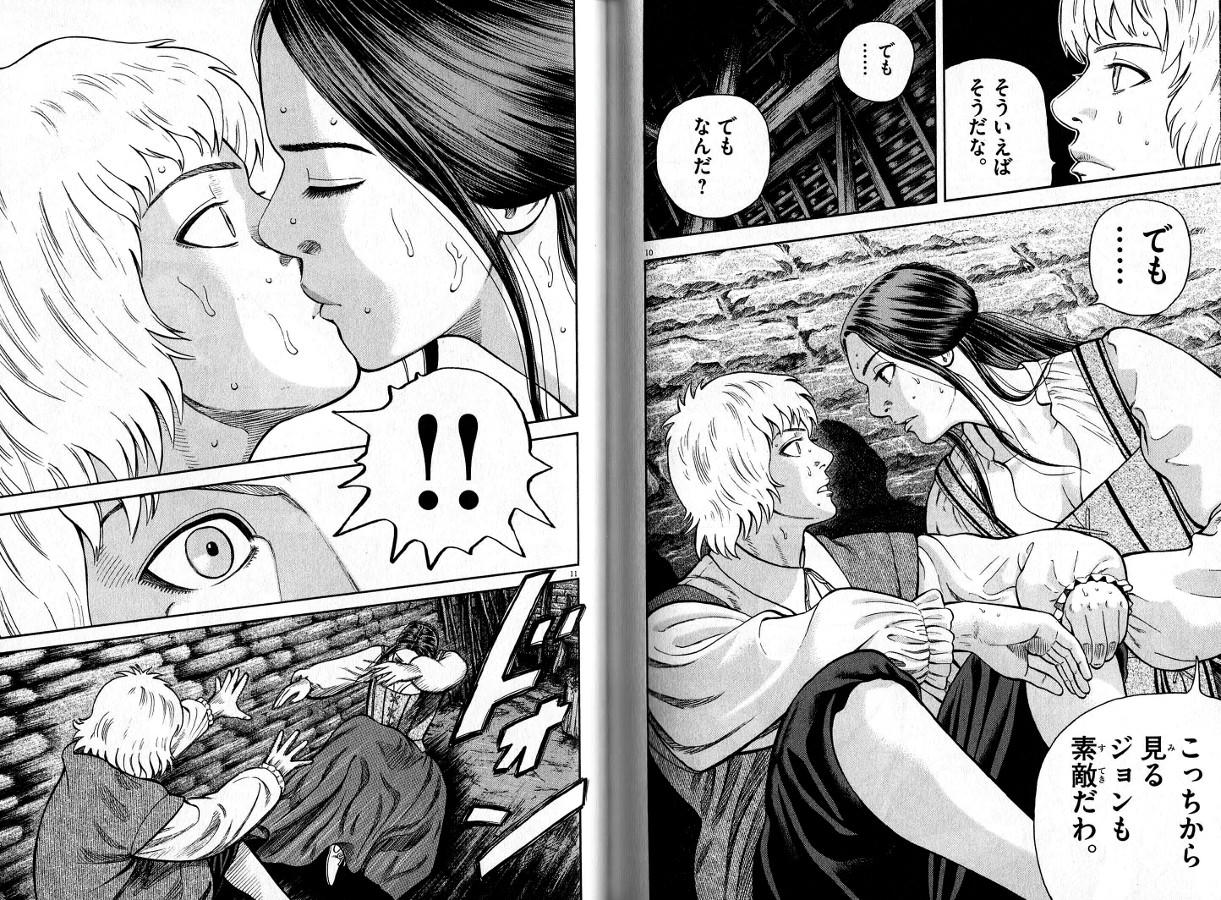
(Cathy surprises John Combe with a kiss. But not in a good way.)
From here, we get a few story threads that diverge and then re-intertwine. First is that Will's father is desperate to move up from the class of "yeoman" to "gentleman," which would represent more fame, more money, and an improvement in social status. He joins various councils and donates money to various causes, while still sleeping with a dark-skinned younger woman. Mary sinks further into a delirium state and tries to eat charcoal to make her skin darker to attract her husband back. Will has no interest in his school studies, while John Combe is forced to cram hard in order to take over the family's estate. There's one child, Roger, who is unable to attend school because his family is too poor. Will's father tries to tell Will to stay away from Roger because it would look bad in his attempt to become a Gentleman, but the older man grabs John Combe by mistake because Will and John look so alike. In defiance, John provides Roger with class notes to learn to read, and Will gives him fruit and bread from the family's larder. Even Simon Hunt is seen in the vicinity of Roger's hut. We then get two incidents that show the gentry's mistreatment of the lower classes - first, an old man chases an apple into the street, into the path of an oncoming carriage containing
Thomas Lucy, a magistrate in Warwickshire and a member of the House of Commons. The driver doesn't try to avoid the old man, because he's a commoner. Later, Roger and his mother are out walking the family dog, when it disappears into the woods. Roger makes the mistake of going into the woods after it, and is attacked by Lucy's pack of fox hounds. The groundskeeper berates the boy for throwing the dogs off the scent of the fox, and Roger has to have one leg amputated.
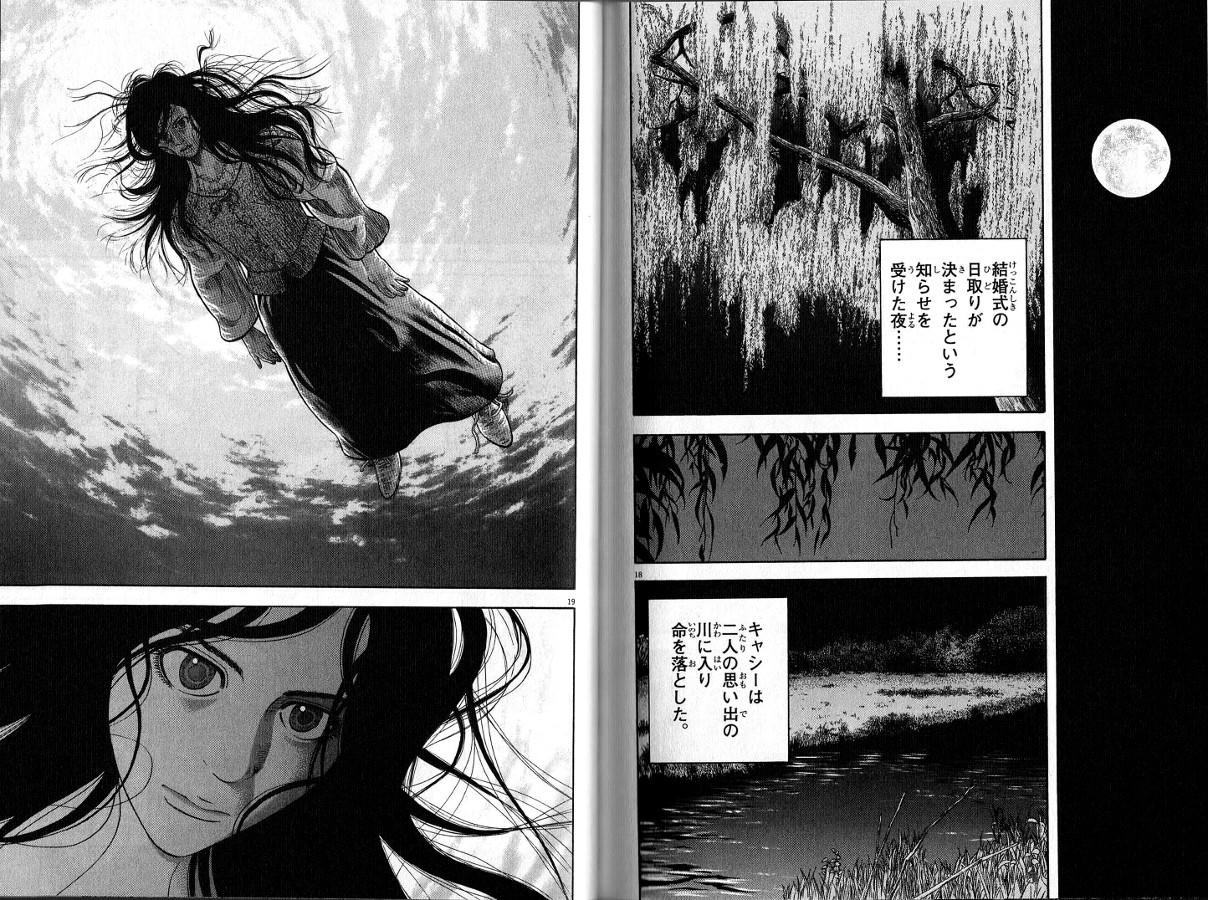
(Cathy doesn't like having to marry someone she doesn't like.)
A little later, John's family lets Will in on a closely guarded secret - they're all actively practicing Catholics, and Simon Hunt is their priest. Will finds the Catholic teachings much more interesting than that of the Protestant church, and he starts staying awake in classes now, too. Unfortunately, the sermons are every Wednesday night, and the other villagers realize that certain people are always "busy" when they are asked to get together for other things on Wednesdays, so the authorities are notified and Simon has to move to France to keep preaching, and isn't replaced by another "teacher" right away. Meanwhile, Will's father is on the fast track to becoming a Gentleman, and he confides in his mistress, Sarah. From here, things go downhill for him. While John S. does get promoted, the additional taxes and operating fees threaten to bankrupt him. Sarah offers to set him up with a pre-paid shipment of wool, but the shipment never arrives, and the seller claims to have had no dealings with anyone named Sarah. When John S. confronts her in a bar, she's rescued by Spencer, a rival noble, and it becomes obvious that Sarah has been sleeping with both men, and had been playing John. S. Will's father is crushed and turns into a despondent drunk.
The years pass, and in 1579, Will has taken over the family glove making business, and has turned into a good craftsman and merchant. John Combe visits occasionally, and one day he's at the shop when a newcomer,
John Cottom, arrives. (Too many John's here.) Combe says he met Cottom on the road and helped him out, but in reality he's the new Catholic priest for the village. In the next Wednesday sermon, Will notices a very beautiful girl named Cathy Hamlet. John C. and Cathy become very close friends and do a lot of things together, but John just views her as a companion, while John's parents fear that the two kids are getting too familiar with each other. The older Combe announces that Cathy is going to be given away in a prearranged marriage. To demonstrate that he is a man of strong convictions, when he finds that John has given permission to someone building a house on their land, he whips his son mercilessly, then goes to the construction site and smashes some of the support beams to bring the house down on the interloper, severely injuring him. Although, John does step in and offers his father an alternative to destroying the house completely - instead renting it out to someone else.
So, when the older Combe makes his decision public (looks like Cathy is one of John's cousins and falls under his purview), she gets desperate. One afternoon, she and John are outside when it starts raining. John carries her to an abandoned cottage, and she says that she doesn't want to marry anyone else, she wants John. She kisses him, and John pushes her away in horror and walks away in the rain. The next day, during the secret Church services, John's mother comes into the house to yell that Cathy's body has been found in the Avon. The older Combe doesn't want word to get out that Cathy had committed suicide, because then her body wouldn't be allowed a proper burial, so he bribes the coroner to change the cause of death to "accident," and pays off everyone else to keep their silence. The public service is held by an incompetent Protestant priest, while Cottom provides a secret service for John and Will. But, John's memories of the day before provoke him into running away and going down to the river. Will follows him and says that it's not his fault. John turns around and kisses Will. He says that when Cathy kissed him, he didn't feel anything like he does now in kissing Will. Will doesn't know how to react. The volume ends with a change in scene, with
Francis Walsingham in London announcing his intentions to drive the Catholics out of England, starting with John Cottom.
 Summary:
 Again, this is historical fiction, and a lot of the people here, and their motivations, probably aren't all that close to the truth. But, this is a decent, fast read, and it is entertaining. Recommended.


